
End-of-Life Doula
Frequently Asked Questions
Clear, practical answers about non-medical end-of-life doula roles, training, certification, scope, specialty support, and professional practice.
Getting Started
Start with the meaning of the role, common services, terminology, scope, readiness, and how doula support differs from other end-of-life roles.
What Is a Death Doula?
Understand the meaning, common services, collaboration, and non-medical scope of the role.
Read more
What Do Death Doulas Do?
Explore planning, companionship, legacy, vigil, family support, daily work, and boundaries.
Read more
What Is an End-of-Life Doula Called?
Compare common titles and learn why a label is not the same as training, scope, or licensure.
Read more
Why Death Doula Work Matters Now
Why planning, presence, communication, caregiver awareness, and death literacy remain important.
Read more
How Emotionally Ready Do You Need to Be?
A grounded look at self-awareness, grief, boundaries, capacity, and support systems.
Read more
Death Doula vs. Hospice Volunteer
Compare independent doula practice with a structured volunteer role inside an organization.
Read moreTraining & Certification
Compare qualifications, certification meaning, timelines, costs, program selection, and realistic pathways for new or previously trained doulas.

What Qualifications Do You Need?
Review education, communication, readiness, practical learning, scope, and ongoing development.
Read more
Do You Need Certification to Practice?
Understand certification, local requirements, organizational policies, insurance, and scope.
Read more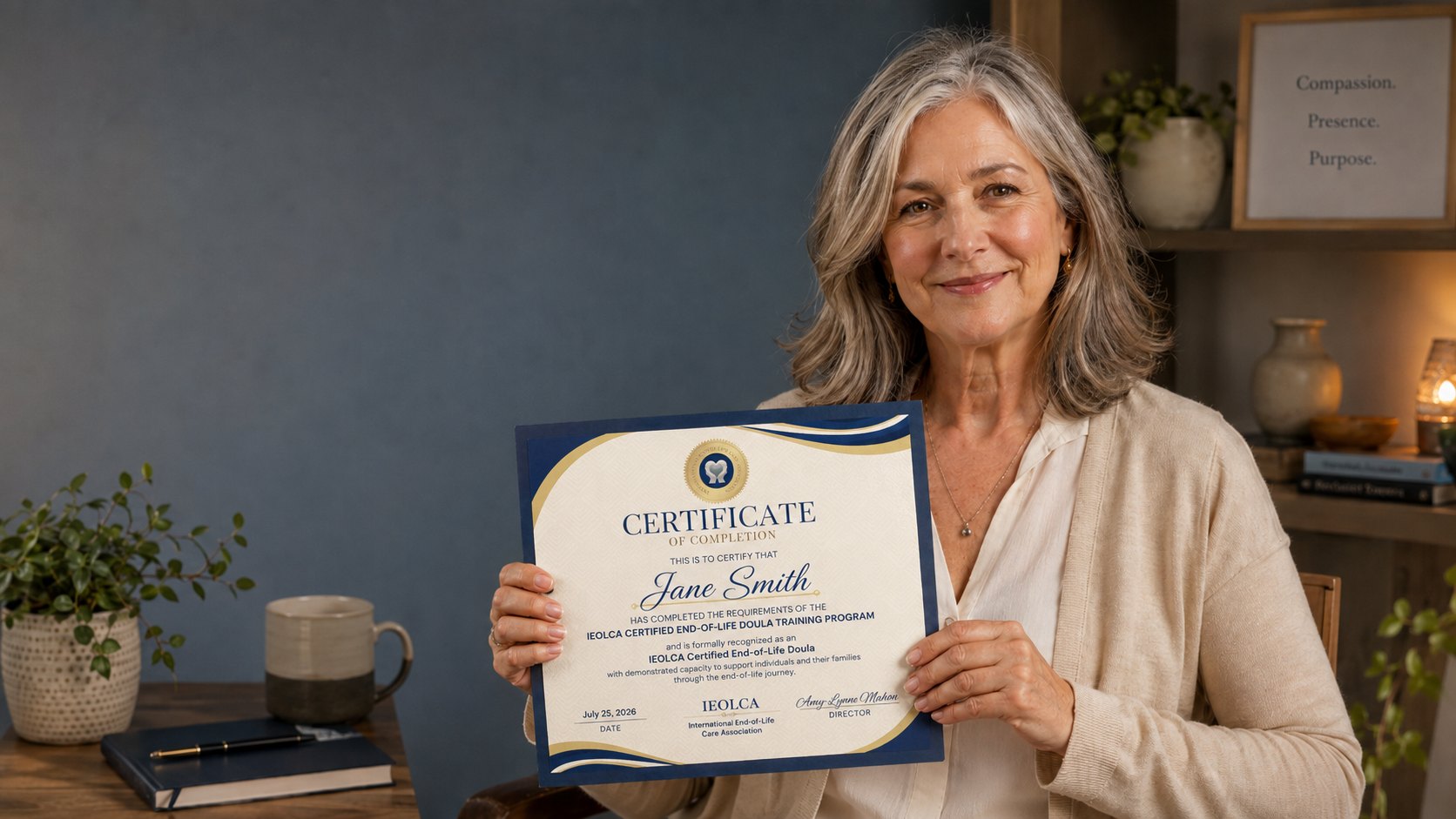
What Does “Certified End-of-Life Doula” Mean?
Learn how provider certification differs from a title, licence, membership, or directory listing.
Read more
How Long Does Training Take?
Compare course hours, workload, access, assessment, pacing, and practical learning.
Read more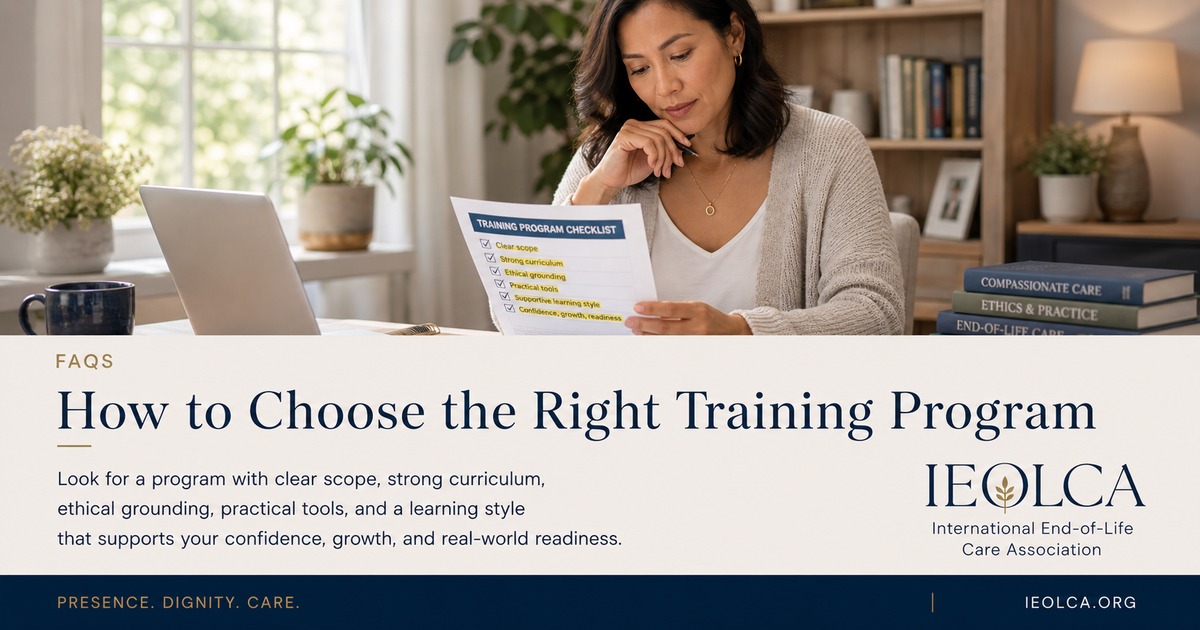
How to Choose the Right Training Program
Evaluate curriculum, scope, assessment, support, access, cost, and credential claims.
Read more
Understanding Certification Costs
Compare tuition, payment structures, included resources, renewal, and possible extra expenses.
Read more
Online Death Doula Training Programs
A comparison framework for formats, curriculum, assessment, support, and credential limits.
Read more
Do You Have to Be a Nurse?
Why a clinical background is not inherently required and why role boundaries still matter.
Read more
7 Questions to Ask Before You Enroll
A focused checklist to compare training scope, cost, support, access, curriculum, ethics, and certification claims.
Read more
Already Trained as a Doula — Why Pursue Certification?
For previously trained doulas considering certification, compare clarity, competency, scope alignment, and professional communication.
Read morePractice & Pathways
Explore income, community demand, facilities, applying training, and realistic ways certification may be used.
What Can You Do With Certification?
Explore personal, volunteer, community, professional, and private-practice pathways.
Read more
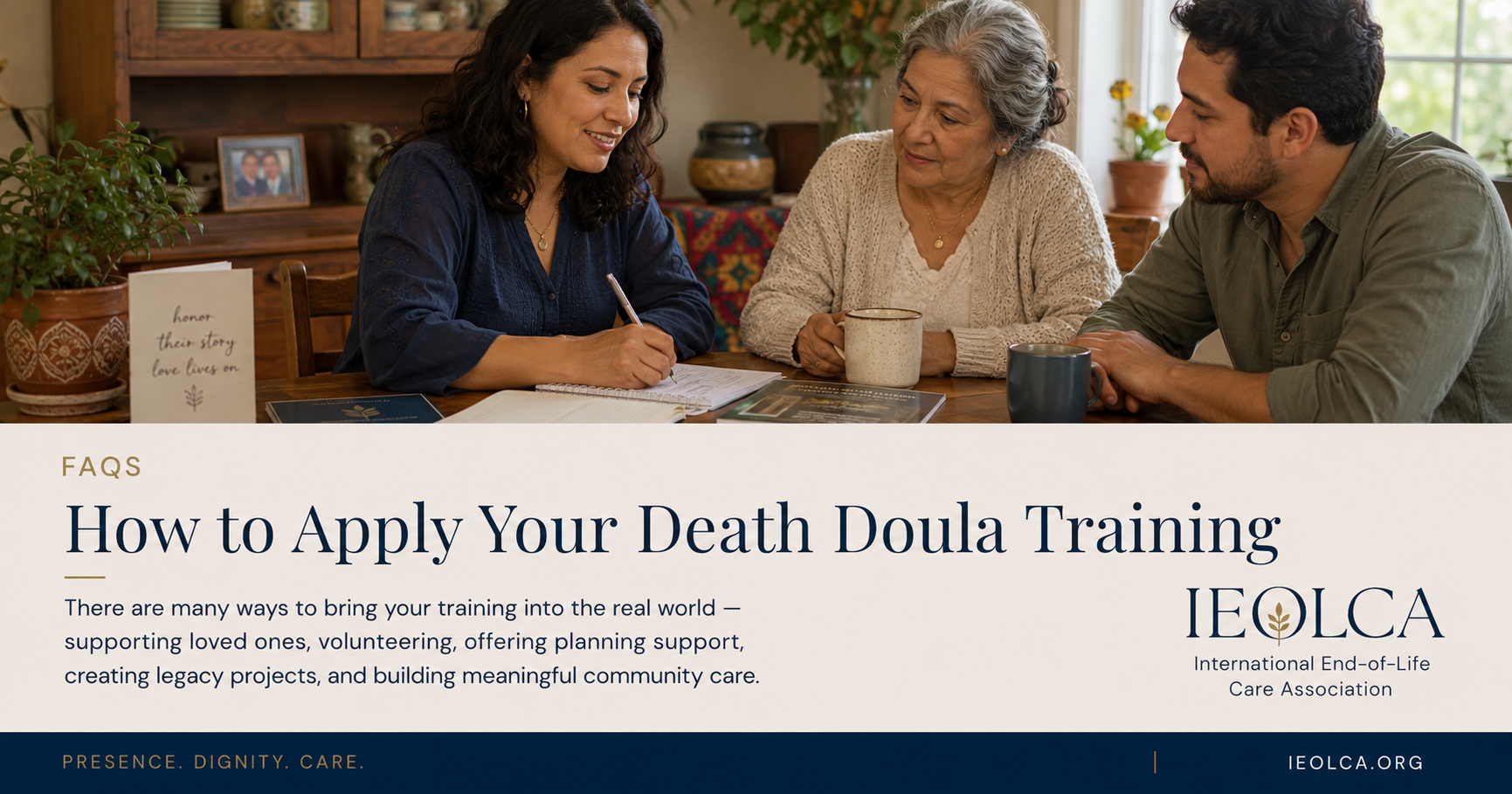
How to Apply Your Death Doula Training
Practical ways to use your learning in personal, volunteer, community, and professional settings.
Read more
Do Death Doulas Make Money?
Understand pricing, income models, expenses, demand, and why earnings vary widely.
Read more
Is There Demand in Your Community?
Assess local awareness, affordability, referrals, existing services, and realistic demand.
Read more
Can Doulas Work in Hospitals or Care Facilities?
Understand consent, facility policy, privacy, insurance, access, and collaboration.
Read more
Can Doulas Help With Advance Care Planning?
How doulas may support reflection and question preparation without giving legal or medical advice.
Read moreMedical Aid in Dying
Scope-aware information about the MAiD doula role, jurisdiction-sensitive terminology, clinical boundaries, and IEOLCA’s Medical Aid in Dying Doula Support Program.

What Is a Medical Aid in Dying Doula?
The non-directive, non-medical role before, during, and after an assisted-dying pathway.
Read more
MAiD, Dying With Dignity, and Assisted Dying
Learn why legal and values-based terms differ by jurisdiction and should not be treated as exact synonyms.
Read more
Do You Need a Clinical Background?
Understand who may explore non-medical MAiD doula education and what remains outside scope.
Read more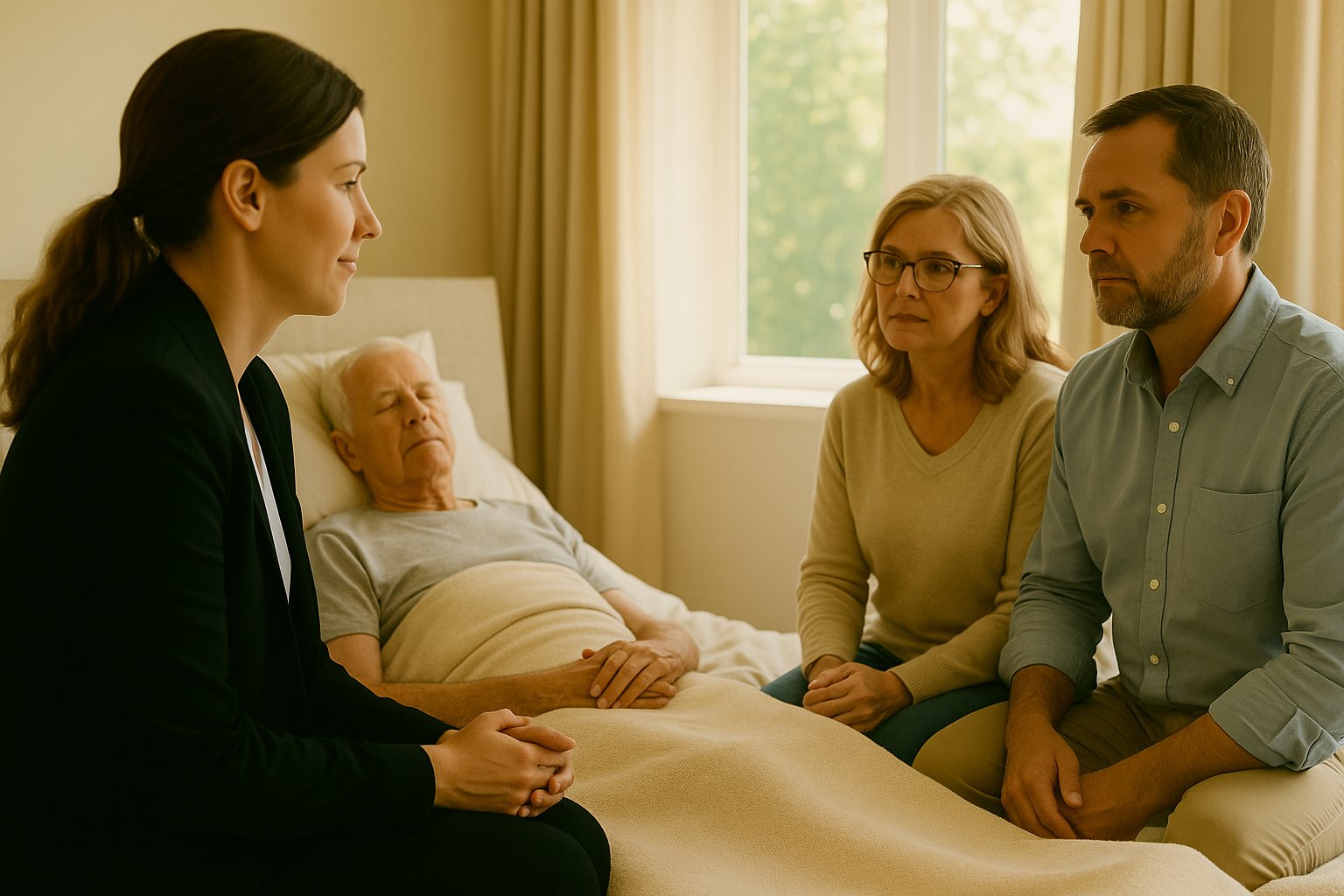
How Can a Death Doula Support Someone Choosing MAiD?
Explore planning, family communication, environment, presence, ritual, and aftercare within a non-medical role.
Read moreDementia & Memory Care
Explore person-directed, non-medical support involving communication, identity, caregiver reflection, environment, planning, and end-of-life presence.
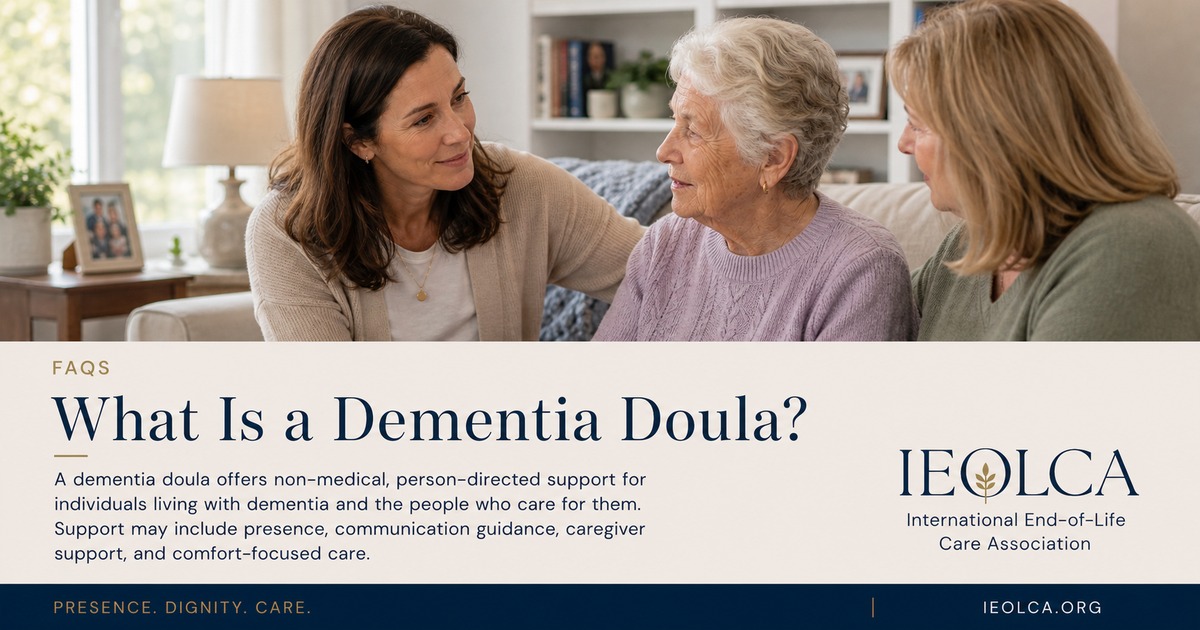
What Is a Dementia Doula?
Understand the role, communication, caregiver support, identity, scope, and practice considerations.
Read more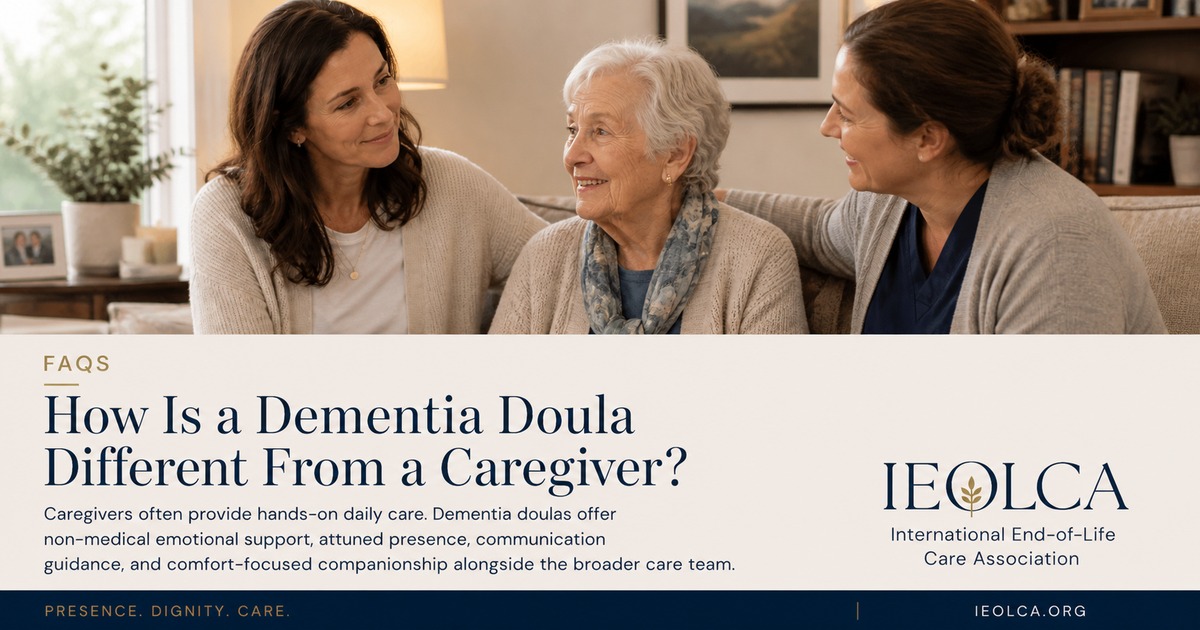
How Is a Dementia Doula Different From a Caregiver?
Compare hands-on daily care with non-medical companionship, communication, and family support.
Read more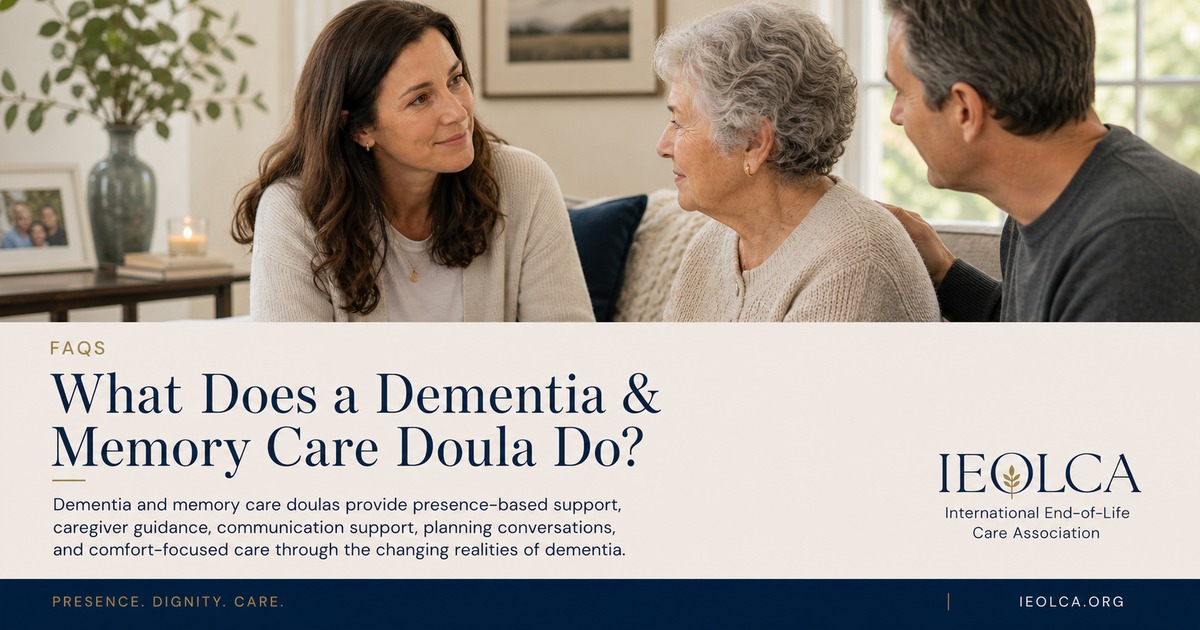
What Does a Dementia & Memory Care Doula Do?
Explore companionship, communication, caregiver, identity, environment, planning, and end-of-life support.
Read morePet Death Doula
Non-medical support for the human-animal bond, veterinary question preparation, euthanasia support, remembrance, and grief.

The International End-of-Life Care Association (IEOLCA) provides online education for people exploring non-medical end-of-life doula work and related specialty support.
IEOLCA emphasizes scope, ethics, communication, cultural humility, grief literacy, boundaries, referral, and collaboration. Program completion does not create a healthcare licence or guarantee employment, clients, income, referrals, or facility access.