
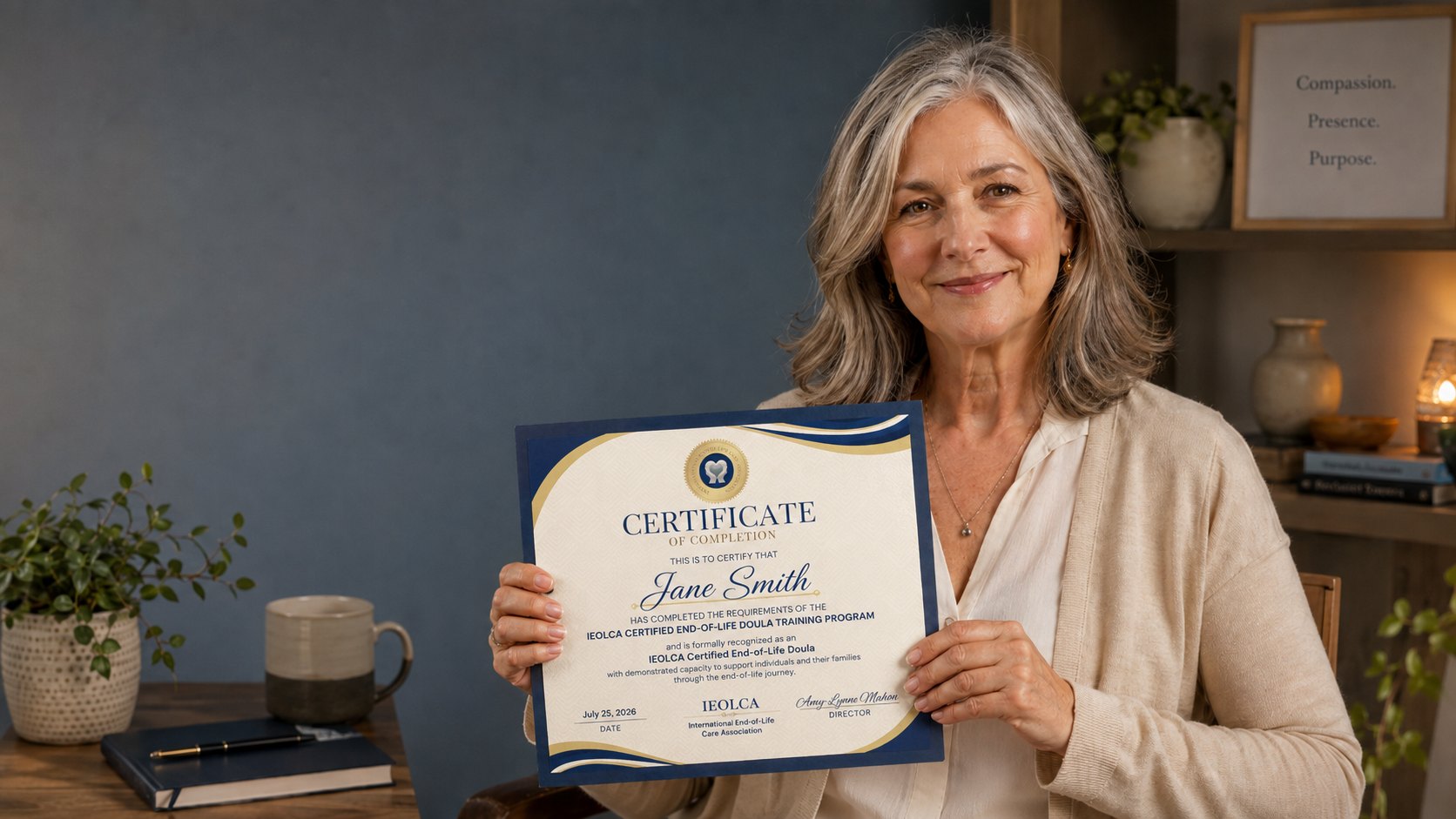
You May Not Need More Training-You May Want Clearer Recognition
Certification after training may help you document your preparation, demonstrate alignment with a defined competency and ethics framework, and explain your professional role more clearly to families, community partners, and potential clients.
That does not mean your original education was inadequate. It does not erase the school, teacher, community, or experience that shaped you. It simply gives you another way to communicate what you have learned and the standards you have chosen to follow.
For some doulas, certification supports greater professional clarity. For others, their original training and experience already meet their needs. The right choice depends on what you want the credential to communicate and how you plan to use it.
Training and Certification Are Related, but They Are Not the Same Thing
Training is the educational process: lessons, readings, practice activities, mentoring, assignments, discussion, and reflection.
Certification is recognition by a particular organization that you completed its stated requirements and met the standards that organization associates with its credential.
Training asks:
What did you study, practise, and learn?
Certification asks:
What requirements did you complete, and what framework does the credential represent?
Important: End-of-life doula certification does not create a government-issued healthcare licence. The work remains non-medical, and doulas must practise within appropriate legal, ethical, and professional boundaries.
Why Might a Previously Trained Doula Pursue Certification?
Certification is not valuable simply because a certificate looks official. Its usefulness comes from what the process and credential can honestly communicate.
A clearer way to describe your preparation
A defined credential may help you explain that you have completed structured education and met the requirements of a particular certifying organization.
Documented alignment with scope, ethics, and boundaries
Families and community partners often want reassurance that a doula understands informed consent, confidentiality, collaboration, non-medical scope, cultural humility, and respectful professional boundaries.
Greater confidence in professional conversations
Certification may make it easier to introduce your role, describe your preparation, and communicate what you do-and do not do-without sounding vague or overstating your authority.
A credential for professional materials
Some doulas value having a credential they can accurately include in a biography, website, directory profile, presentation, or community partnership proposal.
An opportunity to review and integrate prior learning
A thoughtful certification process can help you revisit earlier education, identify gaps, and connect practical experience with a clearer competency framework.
The healthiest reason to pursue certification is clarity-not status. A credential should help you communicate your preparation honestly, not imply authority the profession or certificate does not provide.
What Certification Does Not Mean
A trustworthy article about certification should be equally clear about its limits.
- It does not create a nursing, counselling, social-work, legal, or healthcare licence.
- It does not authorize diagnosis, treatment, medication administration, psychotherapy, or legal advice.
- It does not guarantee employment, referrals, clients, income, or acceptance by every hospice or healthcare organization.
- It does not replace your original education or make another training provider’s work irrelevant.
- It does not mean professional learning and reflection are finished.
Certification should communicate something specific and truthful. Before enrolling, ask the organization to explain exactly what its credential represents and what completion requires.
Do You Have to Start Over With Another Full Program?
Not necessarily. Some organizations offer bridge, recognition, or competency-based pathways for people who have already completed substantial education.
IEOLCA’s Bridge Pathway is designed for doulas who have completed at least 30 hours of structured end-of-life or death doula education outside IEOLCA. Rather than repeating a full foundational program, eligible participants review IEOLCA’s competency materials and complete an assessment process that includes a 60-question competency assessment, three detailed case studies, and alignment with IEOLCA’s Code of Ethics and Scope of Practice.
The pathway currently has a one-time fee of $149 USD. Payment provides access to the process; the IEOLCA Certified End-of-Life Doula credential is issued after the pathway requirements are successfully completed.
That distinction matters. A bridge pathway should recognize your previous investment while still asking you to demonstrate the competencies associated with the new credential.
Questions to Ask Before Pursuing an Additional Certification
- What do I want this credential to communicate?
- Does the organization clearly define its competencies, ethics, and scope expectations?
- What must I complete to earn the credential?
- Does the process recognize my previous education, or require unnecessary repetition?
- Does the organization make realistic claims about what certification can and cannot do?
- Are there renewal fees, membership requirements, or continuing obligations?
- Will the process help me practise more clearly, ethically, and confidently?
Your answer does not need to be yes simply because certification is available. The goal is to choose a path that supports your values, your work, and the way you want to represent your preparation.