
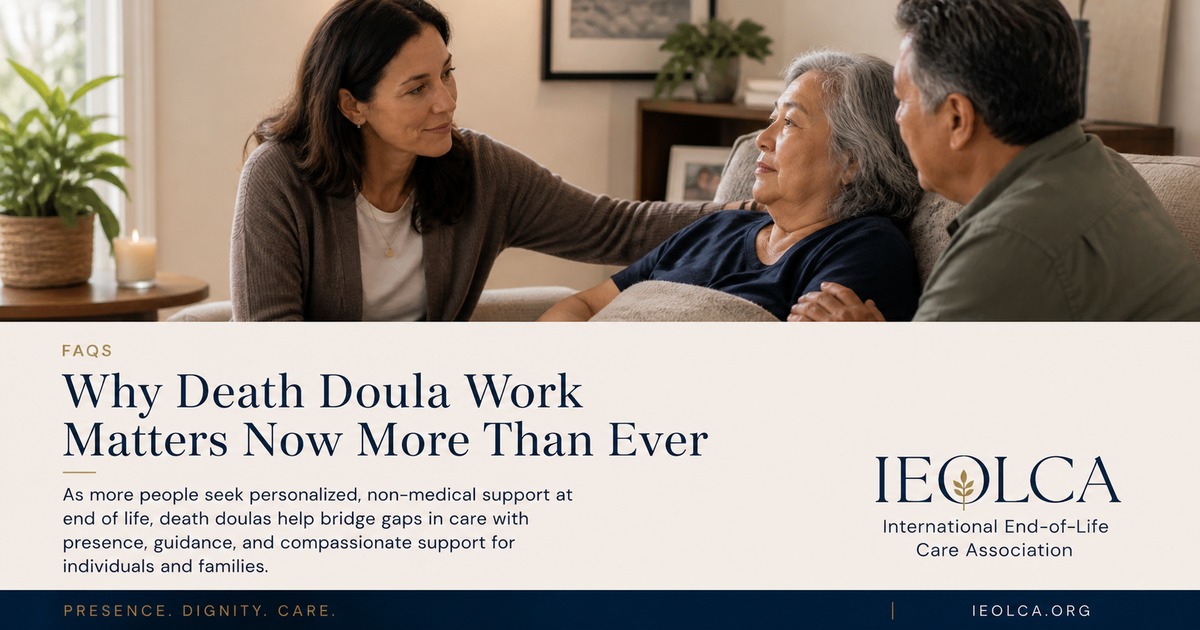
End-of-Life Care Includes Human Needs as Well as Clinical Needs
Death doula work may matter because people and families often need time, communication, planning, companionship, legacy support, caregiver reflection, and grief-informed resources in addition to medical care.
A doula may complement the person’s existing circle of support. The role should not be presented as a replacement for clinical, legal, counselling, spiritual-care, funeral, or personal-care services.
The value of the role depends on fit, consent, competence, scope, affordability, setting, and what support is already available.
Why This Work May Feel Relevant Today
Longer caregiving journeys
Some families navigate chronic illness, dementia, disability, or prolonged decline while also managing work, parenting, distance, and financial pressure.
Limited time for non-clinical needs
Clinical professionals focus on assessment, treatment, symptoms, and safety. Families may still want more time for reflection, planning, communication, and presence.
Greater interest in planning
Some people want to discuss values, decision-making, family roles, vigil preferences, legacy, and practical questions before a crisis.
Changing conversations about death
Death cafés, advance care planning, grief education, and community conversations may make mortality more discussable in some places.
Why Some Families Seek Death Doula Support
- they want help organizing questions for professionals
- they need time for values-based planning conversations
- family roles or expectations feel unclear
- caregivers need reflection, boundaries, or resource referrals
- legacy, life review, ritual, or remembrance matters
- they want non-medical companionship during a vigil
- they want culturally or spiritually responsive support
- they need help locating appropriate community resources
Not every family needs or wants a doula. Existing family, hospice, community, spiritual, or professional supports may already meet their needs.
Death Literacy and Honest Conversation
Death literacy includes the knowledge, language, confidence, and community connections that help people engage with dying, grief, planning, and care.
A doula may contribute by:
- supporting plain-language conversations
- helping people prepare questions
- sharing general non-diagnostic education
- identifying professional and community resources
- encouraging earlier reflection without pressure
A doula should not interpret medical information, legal documents, eligibility criteria, or symptoms as a substitute for an authorized professional.
Access and Equity Matter
End-of-life resources are not distributed equally. Geography, cost, disability, language, culture, discrimination, transportation, caregiving capacity, and local services can all shape access.
A doula may help locate resources or make information easier to navigate, but should not claim to solve structural inequities or guarantee access to care.
Culturally responsive support requires humility, relationship, and accountability—not simply marketing oneself as inclusive.
What Death Doula Support May Contribute
Preparation
Helping people clarify questions, values, practical concerns, and preferred forms of support.
Presence
Offering attentive, non-directive companionship without trying to fix or control the experience.
Connection
Supporting communication, legacy, ritual, and relationships when invited and within scope.
Referral
Recognizing when clinical, legal, counselling, spiritual, funeral, or community expertise is needed.
These are possible contributions, not promised results.
What Death Doula Support Cannot Guarantee
- a peaceful or meaningful death
- reduced suffering, fear, trauma, or conflict
- family reconciliation or agreement
- a particular grief response
- lower healthcare costs
- fewer medical interventions
- care that follows every stated preference
- home death or access to a preferred setting
The Role Remains Non-Medical
Death doulas do not, by virtue of the title or certificate:
- diagnose or treat illness
- manage symptoms or medication
- provide nursing or personal care
- assess capacity or make decisions
- give legal advice
- provide psychotherapy or crisis treatment
- direct funeral arrangements or body care where regulated
- gain automatic access to facilities, records, or care teams
Does Community Need Mean There Is Paid Demand?
Not necessarily. A community may have serious end-of-life needs without having awareness of doulas, referral pathways, or the ability to pay privately.
Demand may depend on:
- local awareness and trust
- affordability
- existing hospice and community services
- cultural attitudes toward outside support
- organizational policies
- the doula’s specific services and availability
Social value, community need, employment, and business sustainability are different questions.
Who May Be Suited to Explore This Work?
People may be drawn to the role from healthcare, caregiving, education, spiritual care, grief support, community work, funeral service, or personal experience. No single background is required.
Helpful capacities include:
- attentive listening
- cultural humility
- comfort with uncertainty
- clear boundaries
- reliability and follow-through
- self-awareness and emotional regulation
- willingness to refer beyond scope
- commitment to ongoing learning
Feeling called to the work can be a starting point. It is not a substitute for education, reflection, competence, and realistic limits.