
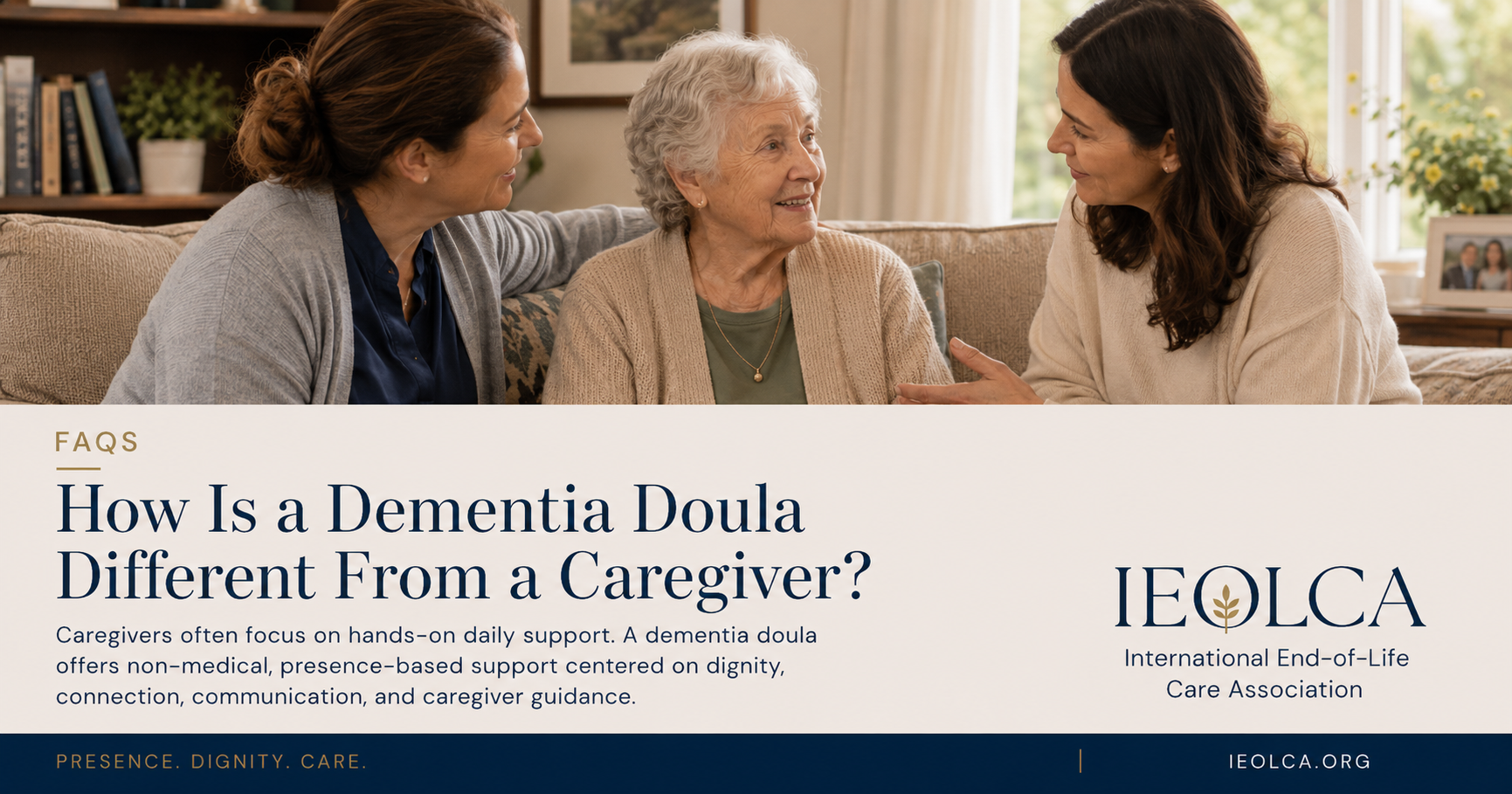
The Main Difference Is Usually the Purpose and Scope of the Role
A caregiver may provide daily support such as meals, supervision, household help, mobility assistance, personal care, medication reminders, or companionship, depending on their training and role. A dementia doula generally offers non-medical emotional, relational, informational, planning, family, and presence-based support rather than routine hands-on care.
The word caregiver covers many people. It may refer to an unpaid family member, friend, personal support worker, home-care aide, nursing assistant, attendant, or another paid care provider. Their duties and authority can differ significantly.
Titles do not determine legal scope by themselves. Always ask what the individual is trained, insured, employed, contracted, and legally permitted to do.
What Does a Caregiver Do?
A caregiver supports the person’s day-to-day life. The role may be informal and unpaid or formal and paid. Duties depend on the person’s needs, the caregiver’s training, the service agreement, and local rules.
A caregiver may help with:
- meal preparation and hydration
- companionship and supervision
- transportation and appointments
- household routines and safety
- dressing, bathing, toileting, or grooming when trained and authorized
- mobility or transfers when trained and authorized
- medication reminders or assistance within the permitted role
- communication with family or the care team when consent and policy allow
Family caregivers may carry many of these responsibilities without formal training. Paid caregivers may have defined duties, employer supervision, documentation requirements, and restrictions that differ from one setting to another.
What Does a Dementia Doula Do?
A dementia doula supports the human and relational experience of cognitive change. The role is usually non-medical and non-clinical.
Within training, consent, and agreement, support may include:
- calm companionship and attentive presence
- communication approaches that reduce correction and confrontation
- learning the person’s history, preferences, routines, culture, and sources of comfort
- legacy, life-review, memory, and meaning-making activities
- support for family conversations and anticipatory grief
- non-medical planning and question preparation
- sensory and environmental preferences such as music, light, familiar objects, and pacing
- referral to healthcare, social-service, legal, respite, grief, spiritual-care, and community resources
A dementia doula does not gain authority to perform hands-on care merely by completing doula training. Personal care, medication support, transfers, behavioural intervention, or clinical monitoring may require separate qualifications and authorization.
Dementia Doula and Caregiver: Side by Side
Caregiver
- may be family, informal, volunteer, or paid
- often supports daily routines and safety
- may provide hands-on care when trained and authorized
- may have regular or extended contact
- may work under an employer, agency, or care plan
- responsibilities vary widely
Dementia doula
- usually provides non-medical support
- focuses on presence, communication, identity, and family experience
- does not automatically provide personal care
- may offer defined sessions or ongoing support
- may practise independently or through an organization
- should use a clear written scope and agreement
The roles may overlap in companionship, emotional support, life review, communication, or practical organization. When they overlap, responsibilities should still be clear so no one assumes that a task is being handled when it is not.
What Does Person-Directed Dementia Support Mean?
Person-directed support begins with the individual—not only the diagnosis, task list, or family’s preferences. It asks what helps this person feel safe, respected, connected, and more like themselves.
This may involve:
- learning the person’s story, culture, relationships, and routines
- noticing how they communicate comfort, distress, consent, or refusal
- offering choices in ways the person can understand
- adjusting pace, noise, light, approach, and timing
- avoiding unnecessary correction or argument
- recognizing strengths and remaining abilities
- respecting privacy, dignity, and personal space
Person-directed does not mean ignoring safety, capacity, substitute decision-making, or clinical guidance. It means including the person’s preferences and identity as fully as possible within the legal and care context.
Consent still matters when communication changes. A diagnosis does not automatically erase the person’s ability to express choices, comfort, discomfort, or refusal.
How May a Dementia Doula Support Family Caregivers?
Family caregivers often carry practical work, decision fatigue, grief, interrupted sleep, uncertainty, financial pressure, and changing family roles.
A doula may support them by:
- listening without judging how the family is coping
- helping identify questions for clinicians and service providers
- sharing non-clinical communication and connection ideas
- helping document routines, preferences, and meaningful life details
- supporting anticipatory grief and changing relationships
- helping the family locate respite, counselling, social work, or other resources
- encouraging realistic boundaries and shared responsibility
A doula should not diagnose caregiver burnout, provide psychotherapy without another credential, promise to resolve family conflict, or position themselves as the family’s sole source of support.
Can a Dementia Doula and Caregiver Work Together?
Yes. With consent, privacy safeguards, and clear responsibilities, the roles may complement one another.
For example:
- a caregiver may prepare a meal while the doula supports a calm, familiar dining environment
- a paid aide may assist with dressing while the doula shares known preferences or calming routines with permission
- a family caregiver may manage appointments while the doula helps organize non-clinical questions and observations
- care staff may follow a care plan while the doula offers additional companionship, legacy work, or family support
- the healthcare team may address symptoms while the doula helps the family prepare and reflect
Collaboration does not make the doula a clinical team member. Access to records, meetings, facilities, or private health information requires consent and may also require organizational authorization.
Questions to Ask Before Hiring Either Role
- What exactly will you provide? Ask for a written description of duties and limits.
- What training and experience do you have? Look beyond the title.
- Are you insured for these services? Confirm that the service description matches the coverage.
- Do you provide personal care? Ask what tasks are included and what qualifications support them.
- How do you handle consent and privacy? Clarify family communication and record access.
- What happens when needs change? Ask about referrals, emergencies, and situations outside scope.
- How will you work with existing caregivers or providers? Avoid duplicated or missing responsibilities.