
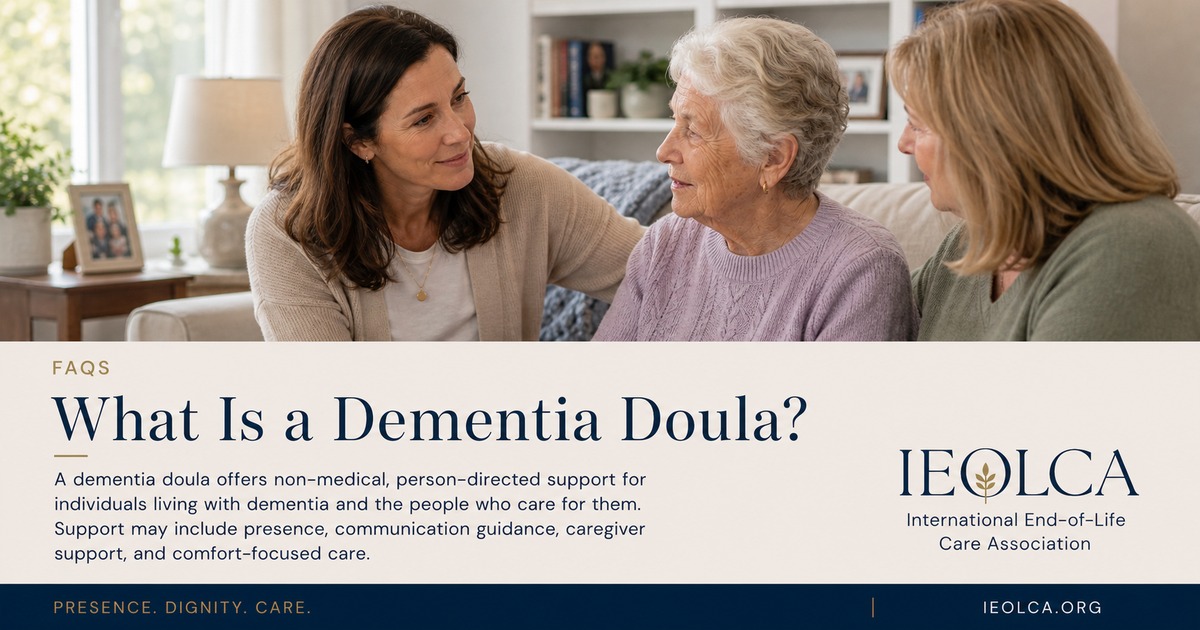
A Dementia Doula Offers Non-Medical Support Across a Changing Journey
A dementia doula is a non-medical support person who may provide companionship, communication support, caregiver reflection, identity and life-story support, environmental awareness, planning, and end-of-life presence for a person living with dementia and those close to them.
The role should remain separate from diagnosis, treatment, medication, hands-on personal care, clinical monitoring, capacity assessment, legal decision-making, psychotherapy, and case management.
The title alone does not establish training, insurance, competence, or authority. Ask what the individual is trained and permitted to provide.
Understanding the Dementia Doula Role
Dementia may change memory, communication, routines, decision-making, relationships, and caregiving needs. A dementia doula focuses on the human experience around those changes without replacing medical or hands-on care.
The doula may help keep attention on:
- the person’s identity and life story
- preferred routines and ways of connecting
- emotional and relational needs
- caregiver experience and boundaries
- communication as language changes
- planning and end-of-life preferences
The role is not literally a “bridge” with authority between families and clinicians. A doula may support communication and question preparation, but clinical interpretation and care coordination remain with authorized professionals.
Core Areas of Dementia Doula Support
Companionship
- calm, attentive company
- conversation or quiet presence
- music, familiar objects, or meaningful activities
- connection without testing memory
Communication
- simple language and slower pacing
- non-verbal cues
- emotional validation
- avoiding unnecessary correction or shame
Caregiver support
- listening and reflection
- helping organize questions
- role and boundary conversations
- referrals to respite, counselling, or community resources
End-of-life support
- vigil and environment planning
- legacy and life-review support
- ritual or meaningful presence
- early grief support within scope
Communication and Emotional Validation
As communication changes, a doula may listen for tone, body language, movement, facial expression, rhythm, and emotional cues.
A doula may:
- use one idea at a time
- allow more time for responses
- avoid quizzing or forced recall
- respond to emotion instead of arguing about facts
- use familiar names, music, routines, or objects
Validation does not mean agreeing to unsafe requests or ignoring sudden changes. Pain, injury, delirium, medication concerns, or significant behavioural changes should be referred promptly to caregivers or clinicians.
What Person-Directed Support Means
Person-directed support means including the person’s preferences, identity, communication, culture, relationships, and routines as fully as possible.
It does not mean ignoring:
- decision-making capacity
- lawful substitute decision-making
- clinical care plans
- facility policies
- safety concerns
- consent and privacy
A practical version of the “Platinum Rule” is to learn how this person prefers to be supported—without assuming those preferences remain static or override safety and law.
Identity, Life Story, and Familiarity
A dementia doula may use photographs, music, recipes, stories, familiar objects, routines, or sensory preferences to support connection and continuity.
The goal is not to test memory or force accuracy. A person should not be pressured to remember, explain, disclose, reconcile, or complete a legacy project.
Touch, recording, photography, prayer, ritual, and family involvement all require appropriate consent.
Caregiver Support Without Replacing Care
A doula may listen to caregivers, help organize questions, support family conversations, identify limits, and provide referrals.
A doula should not describe companionship as formal respite unless the service is structured, insured, and appropriate for the person’s supervision and safety needs.
Dementia doula support does not replace home care, respite care, personal care, case management, counselling, or emergency support.
Support Near the End of Life
A dementia doula may help families reflect on comfort, familiar routines, environment, music, ritual, legacy, vigil preferences, and who the person may want nearby.
The doula may offer general, non-diagnostic education while directing pain, breathing, swallowing, nutrition, medication, consciousness, symptom, and safety concerns to the clinical team.
A doula does not determine capacity, interpret legal documents, obtain medical consent, or make healthcare decisions.
How Is a Dementia Doula Different From Other Roles?
Caregiver or care aide
May provide hands-on daily care, supervision, meals, bathing, dressing, mobility support, or medication assistance within the role.
Dementia doula
Focuses on non-medical companionship, communication, identity, caregiver reflection, legacy, environment, and end-of-life support.
Hospice volunteer
Works within a hospice organization’s training, supervision, policies, schedule, and defined volunteer scope.
Healthcare professional
Provides assessment, diagnosis, treatment, clinical monitoring, medication, or regulated care according to professional scope.
For a fuller comparison, see How Is a Dementia Doula Different From a Caregiver?
Do You Need a Medical Background?
A nursing or clinical background is not inherently required for a non-medical dementia doula role.
Specialized education should address:
- dementia literacy
- communication changes
- consent and capacity
- caregiver support
- person-directed practice
- ethical boundaries and referral
- end-of-life and grief awareness
Training does not authorize medical or personal-care tasks.
Can You Build a Dementia Doula Practice?
Some people may offer independent, non-medical dementia doula services. Before doing so, consider:
- business registration and local requirements
- professional liability insurance
- written service agreements
- privacy and record practices
- consent and substitute decision-making
- clear supervision and safety limits
- referral and escalation procedures
- local demand and ability to pay
Certification does not guarantee clients, referrals, income, facility access, or partnerships with memory care communities.
Questions to Ask Before Hiring a Dementia Doula
- What services do you provide? Ask for a written description.
- What is outside your scope? Look for clear medical, personal-care, legal, and counselling boundaries.
- What dementia-specific education do you have? Review the substance behind the title.
- How do you handle consent and capacity? Ask how the person’s voice and lawful decision-making arrangements are respected.
- Are you insured? Confirm the service matches the coverage.
- How do you communicate with family and professionals? Clarify privacy and authorization.
- How do you respond when needs change? A responsible doula should have a referral and escalation process.