
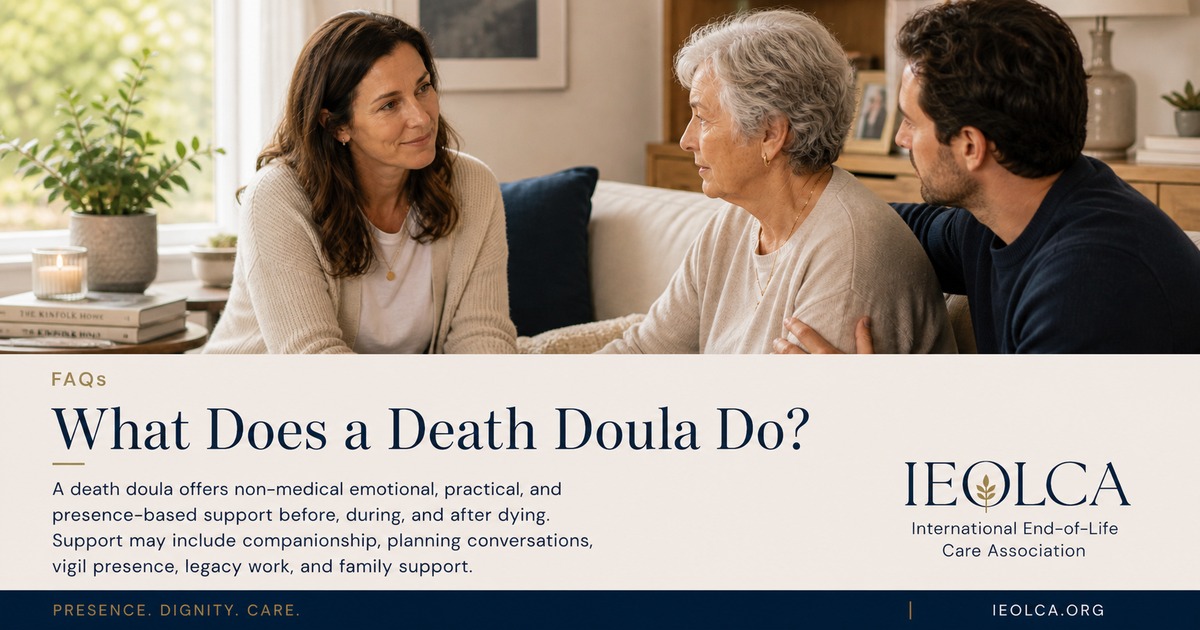
Death Doulas Support the Human Experience Around Dying
Death doulas provide non-medical emotional, practical, relational, informational, cultural, spiritual, legacy, vigil, and grief-informed support. They do not replace doctors, nurses, hospice teams, therapists, lawyers, funeral professionals, or personal-care providers.
Some doulas focus on planning. Others focus on companionship, legacy, family support, vigil preparation, grief-informed follow-up, or a particular community or specialty. No doula should assume authority simply because they hold a certificate.
Titles do not determine scope by themselves. Ask what the individual is trained, insured, contracted, and legally permitted to do.
Core Death Doula Services
Planning and preparation
- values-based reflection
- question preparation for professionals
- vigil and environment planning
- resource organization and referrals
Emotional and relational support
- calm, non-judgmental listening
- family communication support
- caregiver reflection and boundaries
- steady companionship
Legacy and meaning
- life review
- letters, recordings, stories, or memory projects
- ritual or ceremony preparation
- cultural or spiritual preferences
Vigil and grief-informed support
- presence during the final days or hours
- supporting family rest and rotation
- helping organize immediate non-clinical questions
- early grief companionship and referral
Every service requires consent. Touch, prayer, ritual, photography, recording, family involvement, and presence around the body should never be assumed.
Advance Care Planning Support
A doula may help a person reflect on values, identify questions, organize information, and prepare for conversations with healthcare and legal professionals.
A doula should not:
- give legal advice
- complete or sign documents for the person
- interpret medical information as a clinician
- recommend treatment choices
- promise that wishes will be followed in every circumstance
Family Communication and Caregiver Support
A doula may help families slow down, clarify questions, listen to different perspectives, and keep the person’s preferences visible where consent and capacity allow.
The doula is not automatically a mediator, decision-maker, care coordinator, or family spokesperson. Conflict, abuse, capacity concerns, crisis, or complex legal disputes may require qualified professionals.
Legacy, Life Review, and Meaning-Making
Legacy support may include letters, recordings, photographs, recipes, playlists, memory boxes, ethical wills, stories, or life-review conversations.
These activities should be guided by the person’s interest and privacy. No one should be pressured to disclose memories, reconcile relationships, create a legacy project, or participate in rituals they do not want.
Vigil Planning and Active-Dying Presence
A doula may help plan the environment, identify who the person wants present, organize music or meaningful objects, support family breaks, and offer calm presence.
A doula may share general, non-diagnostic education about common changes near death while directing symptom, medication, breathing, pain, consciousness, or safety questions to the clinical team.
A doula should never delay urgent clinical contact or interpret symptoms as a substitute for a nurse or physician.
Immediate After-Death and Early Grief Support
After a death, a doula may offer quiet presence, help organize questions, support a chosen ritual, assist with memorial ideas, and connect the family with funeral, legal, spiritual, grief, or community resources.
After-death contact with the body, transportation, washing, cooling, documentation, pronouncement, reporting, and funeral arrangements may be regulated or governed by facility policy. A doula should not assume these activities are permitted.
How Death Doula Support May Unfold Over Time
- Initial conversation: Clarify needs, consent, scope, availability, fees, privacy, and expectations.
- Planning: Identify values, questions, resources, legacy interests, and vigil preferences.
- Changing needs: Adjust support without moving beyond competence or agreement.
- Final days or hours: Offer non-medical presence and family support while clinical needs remain with authorized providers.
- Immediately after death: Follow local law, facility policy, consent, and the family’s chosen professionals.
- Early follow-up: Offer grief-informed listening and appropriate referrals without presenting doula support as therapy.
What Death Doulas Do Not Do
Medical and personal care
- diagnosis or treatment
- medication advice or administration
- nursing procedures
- personal care or transfers without separate qualification
Legal and decision authority
- legal advice
- drafting legal documents without qualification
- capacity or eligibility decisions
- acting as substitute decision-maker without lawful authority
Mental-health treatment
- psychotherapy
- diagnosing grief or trauma conditions
- crisis counselling without credentials
- promising healing or resolution
Guaranteed access or outcomes
- automatic facility access
- clinical-team membership
- universal service acceptance
- a particular death, grief, family, or business outcome
What Does a Typical Day Look Like?
There is no standard day. Depending on the practice model, a doula may:
- meet with a person or family
- prepare questions or planning materials
- support a legacy project
- offer companionship or vigil presence
- make referrals or consult with a supervisor or peer
- complete documentation, scheduling, invoicing, or business tasks
- follow up with loved ones after a death
- participate in community education
The work may include evenings, weekends, travel, uncertainty, cancellations, and emotional intensity. Strong boundaries and realistic availability are part of competent practice.
How Doulas Customize Their Support
Support may vary based on:
- the person’s wishes, capacity, communication, and culture
- family structure and consent
- time remaining and changing needs
- home, hospice, hospital, facility, or community setting
- the doula’s training, experience, insurance, and written scope
- existing healthcare, spiritual, funeral, legal, and community supports
Person-directed support does not mean ignoring safety, law, substitute decision-making, or clinical guidance. It means including the person’s identity and preferences as fully as possible within the actual care context.
How Death Doulas Work Alongside Hospice and Healthcare Teams
A doula may complement healthcare and hospice by focusing on non-medical needs that fall within the agreed role.
Clinical teams may address:
- assessment and diagnosis
- symptom management
- medication and treatment
- equipment and clinical safety
Doulas may address:
- presence and companionship
- legacy and meaning
- family reflection
- vigil and environment preferences
Collaboration does not automatically make a doula part of the clinical team. Meetings, records, facilities, and private health information require consent and may require organizational authorization.
Questions to Ask Before Hiring a Death Doula
- What services do you provide? Ask for a written description.
- What is outside your scope? Look for clear medical, legal, counselling, and personal-care boundaries.
- What training and experience do you have? Review the substance behind the title.
- Are you insured for these services? Confirm the service matches the coverage.
- How do you handle consent and privacy? Clarify family and provider communication.
- What are your fees and availability? Ask about travel, cancellations, on-call limits, and emergencies.
- How do you refer needs outside your role? A responsible doula should have a referral process.