This heart-centered, non-medical training is for doulas, companions, caregivers, volunteers, family support people, and end-of-life professionals who want to offer steady, compassionate assisted dying support.
International CommunityIEOLCA learners in over 30 countries
60-Day GuaranteeTime to find out if it’s right for you
Why This Matters
Compassionate support for a deeply personal choice.
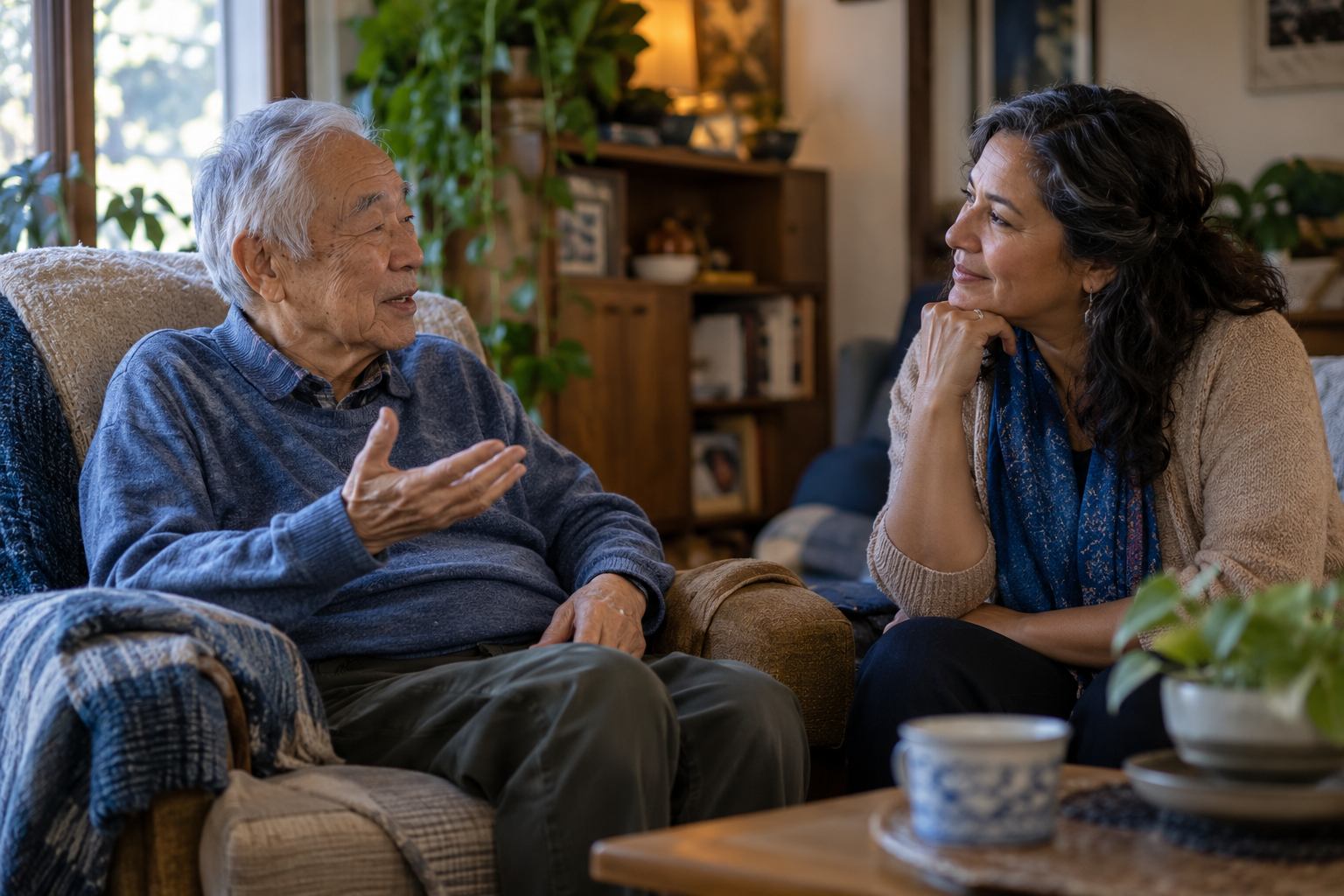
When someone is preparing for an assisted death, there can be practical questions, strong emotions, differing beliefs, and a wish to make the time remaining meaningful. Families may need someone who can listen, help them prepare, and stay alongside them with care.
A doula offers non-medical support that keeps the person’s wishes, values, and voice at the center. This may include thoughtful conversations, family preparation, a comforting environment, legacy work, personal rituals, and care after the death.
This training brings those skills together with clear boundaries and respectful collaboration with the clinical team, so you can offer support without directing decisions or imposing your own beliefs.
Care begins with listening to what matters to this person.
Who This Is For
For those who feel called to be alongside.
You may be an end-of-life doula, hospice companion, volunteer, caregiver, chaplain, counselor, or someone who wants to understand how to support a person and family through an assisted dying pathway.
Whether this is part of the care you already offer or a new area of learning, you are welcome here. The program is designed for learners in different communities and introduces the terminology used across jurisdictions, including MAiD, AID, VAD, PAD, and VSED.
No previous IEOLCA training or clinical background is required. This is a standalone program. Our Certified End-of-Life Doula program is also available for those interested in broader end-of-life learning.
There is room to learn, reflect, and find your own way into this care.
CBClaire B.IEOLCA Student
Student & Graduate Experiences
★★★★★
A New Sense of Purpose and Direction
“This course has given me a new sense of purpose and direction in my life and career. I feel more confident, and I am grateful for the opportunity.”
What You Will Learn
Practical skills for thoughtful accompaniment.
Learn how to offer steady, compassionate support before, during, and after an assisted death, while honoring the person’s choices and remaining within a non-medical role.
Presence, preparation, and the care we bring to a difficult conversation.
Compassionate communication
Listen without judgment, follow the person’s language, and support conversations about wishes, values, and uncertainty.
Family preparation and support
Make room for different beliefs, help families prepare, and support meaningful conversations without directing decisions.
Environment, ritual, and legacy
Explore personal ways to bring comfort, connection, and meaning to the time before death and to the farewell itself.
Day-of presence and aftercare
Develop a grounded approach to bedside support, immediate rituals, early grief, and gentle follow-up.
Ethics and collaboration
Understand boundaries, cultural humility, and the roles of clinical and other professionals across different care settings.
The IEOLCA Approach
Grounded in dignity, guided by the person.
People bring different beliefs, cultures, relationships, and experiences to end-of-life choices. This learning invites you to meet each person with curiosity and care, following the Platinum Rule: treat others as they wish to be treated.
Across the program, you will explore compassionate communication, preparation, family support, ritual, and aftercare. Clinical eligibility, medication, and legal questions remain with the appropriate professionals, while your role centers on the person and the people who love them.
Meaning may be found in simple, personal gestures of care.
ALApril L.IEOLCA Certified End-of-Life Doula
Student & Graduate Experiences
★★★★★
Practical Tools for Compassionate Presence
“Completing this training has been an incredibly meaningful experience. The program gave me practical tools, guidance on boundaries, and a deeper understanding of supporting people with compassion during one of life's most sacred times.”
Inside the Program
8 comprehensive modules, at your own pace.
Move from foundations and ethics into family preparation, day-of presence, aftercare, and professional practice. The learning brings together practical knowledge, reflection, and case studies.
You will explore the language and context of MAiD, AID, VAD, PAD, and VSED, alongside tools for conversations, planning, rituals, and support. Study online at a pace that fits your life, with lifetime access to revisit the material.
Complete the program requirements to receive your IEOLCA Certificate of Completion and digital training badge.
Space to learn, reflect, and bring the learning into your practice.
Module 01
Introduction & Foundations
The history of medical aid in dying worldwide, why people choose this path, the Platinum Rule, global terminology: Medical Assistance/Aid in Dying (MAiD), Voluntary Assisted Dying (VAD), Physician-Assisted Dying (PAD), Voluntarily Stopping Eating and Drinking (VSED), legal landscape overview, scope and boundaries, trauma-informed care foundations, and a doula readiness self-assessment.
FoundationsGlobal terminologyScope
Module 02
Ethics, Language & Cultural Sensitivity
Holding space without judgment, neutral and compassionate language, cultural deep-dives including Indigenous, East Asian, and Black community perspectives, conscientious objection, the disability justice lens, and supporting choice without advocacy.
EthicsCultural humilityLanguage
Module 03
Legal & Procedural Overview
Legal and procedural context (Canada, United States, Australia, New Zealand, Europe), VSED as a distinct pathway, the assessor-practitioner-doula relationship, when access is denied, and scope-safe navigation of the clinical process.
Legal contextVSEDCollaboration
Module 04
Supporting Clients & Families Before the Day
Emotional and practical preparation, holding ambivalence without steering, legacy wishes and meaning-making, facilitating family meetings, the tealight countdown ritual, environment design, supporting clients facing access barriers, and children's involvement.
Family preparationLegacyCommunication
Module 05
The Doula's Role on the Day of Death
Grounded presence and calming practices, what to expect and how to prepare families, bedside language, holding diverse spiritual and cultural perspectives in the room, when complications arise, when a client changes their mind, and scope-conscious boundaries throughout.
Day-of presenceComfortBoundaries
Module 06
Aftercare & Ongoing Support
Immediate rituals and closing practices, early grief support, VSED-specific aftercare, disenfranchised grief, supporting those who opposed the death, structured debrief protocols, referral pathways, and doula integration after a death.
AftercareGriefReferrals
Module 07
Professional Practice & Collaboration
Building trust with healthcare teams, handling conflict with clinical staff, documentation within scope, intake and contracts for MAiD and dying with dignity work, sensitive marketing, privacy and media, community education, and building a sustainable referral network.
Professional practiceIntakeCollaboration
Module 08
Integration & Reflection
Detailed case studies covering a full range of scenarios, Platinum Rule application in complex situations, personal scope statement development, practitioner wellness, and a final integration project with three options suited to different learning styles.
Case studiesReflectionIntegration
Practical Tools Included
Resources to bring into your practice.
Conversation guides, planning tools, and reflective resources to support your learning and the care you offer.
Tools for preparation, reflection, and honoring what matters.
Conversation Scripts & Language GuideScope-safe phrases for clients, families, and care-team conversations across all jurisdictions.
Client Preparation ChecklistPractical prompts to help clients and families feel more organized and less overwhelmed.
Environment Setup GuideLighting, music, sensory comfort, sacred objects, and supportive room flow for the day.
Ritual Planning WorksheetSimple tools to shape memory-making, blessings, reflection, and meaningful farewell moments.
Family Meeting TemplateGentle structure for values-based conversations when emotions and beliefs diverge.
Reflection Journal PromptsPrompts to help doulas process beliefs, boundaries, and emotional responses throughout the work.
Aftercare & Referral Planning SheetSupport for memorialization, grief resources, and follow-up in the days after the death.
Doula Intake Packet FrameworkForms, questions, and boundaries guidance for your first meeting with a MAiD, VAD, or assisted dying client.
JOJoy O.IEOLCA Certified End-of-Life Doula
Student & Graduate Experiences
★★★★★
Learning That Invites Thought and Reflection
“I was deeply surprised at the depth and breadth of information shared, and that it was presented as an interactive experience requiring thought and introspection.”
Upon Completion
What you receive when you complete the program
When you complete the program, you’ll receive recognition of your learning, a shareable digital badge, and the opportunity to be listed in the IEOLCA Doula Directory.
Certificate of Completion
IEOLCA Training
Certificate of Completion
Medical Aid in Dying Support Doula Program
Receive an IEOLCA Certificate of Completion recognizing successful completion of the Medical Aid in Dying Support Doula Program. Yours to display, frame, and share with confidence.
Digital Badge
IEOLCA Recognition
Digital Badge
Medical Aid in Dying Support Doula Program
A shareable IEOLCA digital badge recognizing completion of the program, for your email signature, website, LinkedIn profile, and social media.
Complimentary Directory Listing
IEOLCA Directory
Directory Listing
MAiD Support Doula Program Graduate
Upon completion, you are invited to add your profile to the IEOLCA Doula Directory, helping families find trained, compassionate doulas who offer this kind of support.
“IEOLCA is flawless. A lot of chaplains would benefit from this training. I am so thankful that I picked this particular course.”
Frequently Asked Questions
Straight answers about the program, scope, and access
Everything here is designed to help you quickly understand whether this training is right for you and what to expect.
Beginning Your Journey
Who this learning is for and how to begin.
Is the program available now?
Yes. The Medical Aid in Dying Support Doula Program is available online and self-paced. Students may enroll and begin the training right away.
Do I need clinical or medical experience?
Clinical or medical experience is not required. The training is suited to end-of-life doulas, helping professionals, and anyone who wants to support those choosing medical aid in dying or dying with dignity within a clearly defined scope.
Is this a standalone training?
Yes. This is a standalone training program. You do not need to complete IEOLCA’s Certified End-of-Life Doula program first, and no clinical or medical background is required.
The Training & Your Role
The curriculum, terminology, and the non-medical doula role.
Does this cover MAiD, assisted dying, VAD, AID, PAD, and VSED?
Yes. The program explores medical assistance in dying (MAiD), medical aid in dying, assisted dying, voluntary assisted dying (VAD), AID, PAD, and VSED. It helps students recognize different terminology while keeping the doula role centered on non-medical support, communication, preparation, presence, and aftercare.
What do MAiD, medical aid in dying, assisted dying, and VAD mean?
Terminology varies by jurisdiction. This training introduces the language students may encounter, including medical assistance in dying (MAiD), medical aid in dying, aid in dying, assisted dying, and voluntary assisted dying (VAD), so you can understand the terms used in your own community while remaining clear about the non-medical doula role.
Will this qualify me to give medical or legal advice?
The doula role remains non-medical and non-legal. Clinical eligibility, legal interpretation, medication handling, and clinical decision-making remain with the appropriate licensed professionals. This program focuses on presence, communication, environment, ritual, family support, and aftercare.
Is this relevant if I practice outside Canada?
Absolutely. The curriculum is written to be adaptable across jurisdictions and introduces multiple terms and frameworks, including MAiD, medical aid in dying, assisted dying, AID, VAD, PAD, and VSED. The focus remains on transferable, non-medical support skills and clear scope.
How is this different from general end-of-life doula training?
General end-of-life doula training prepares you for the full spectrum of dying support. This training program goes deep into the specific emotional, relational, ethical, and practical dimensions of medical aid in dying and dying with dignity - including the unique dynamics of a known death date, the tealight countdown, family conflict around the choice, day-of support, and the complex grief that can follow a chosen death.
Learning, Tuition & Completion
Flexible access, tuition choices, and recognition of your learning.
Is this fully online and self-paced?
Yes. The training is designed for flexible online learning so you can move through the material in a way that fits your work, caregiving, and other responsibilities. There is no fixed schedule or deadline.
What is the tuition?
Regular tuition is $249 USD. A 50% tuition support option is available at $124.50 USD for students who need additional financial support. Enrollment gives students access to the training right away.
What certificate do students receive?
Upon successful completion, students receive an official IEOLCA Certificate of Completion for the Medical Aid in Dying Support Doula Program, recognizing non-medical training in supporting MAiD, dying with dignity, and related pathways.
Ready When You Are
Begin your MAiD & Assisted Dying Support Training.
Whether you are extending the care you already offer or exploring this path, develop practical skills for being alongside people and families before, during, and after an assisted death.
Choose your tuition
We want this training to be accessible to anyone feeling called to this path. Choose the tuition level that fits your circumstances; every level includes the same complete program.
“An incredible resource for those seeking a thorough curriculum. The combination of videos and written materials provides an in-depth overview of compassion, listening, and person-centered care. It is a gift to the community.”