
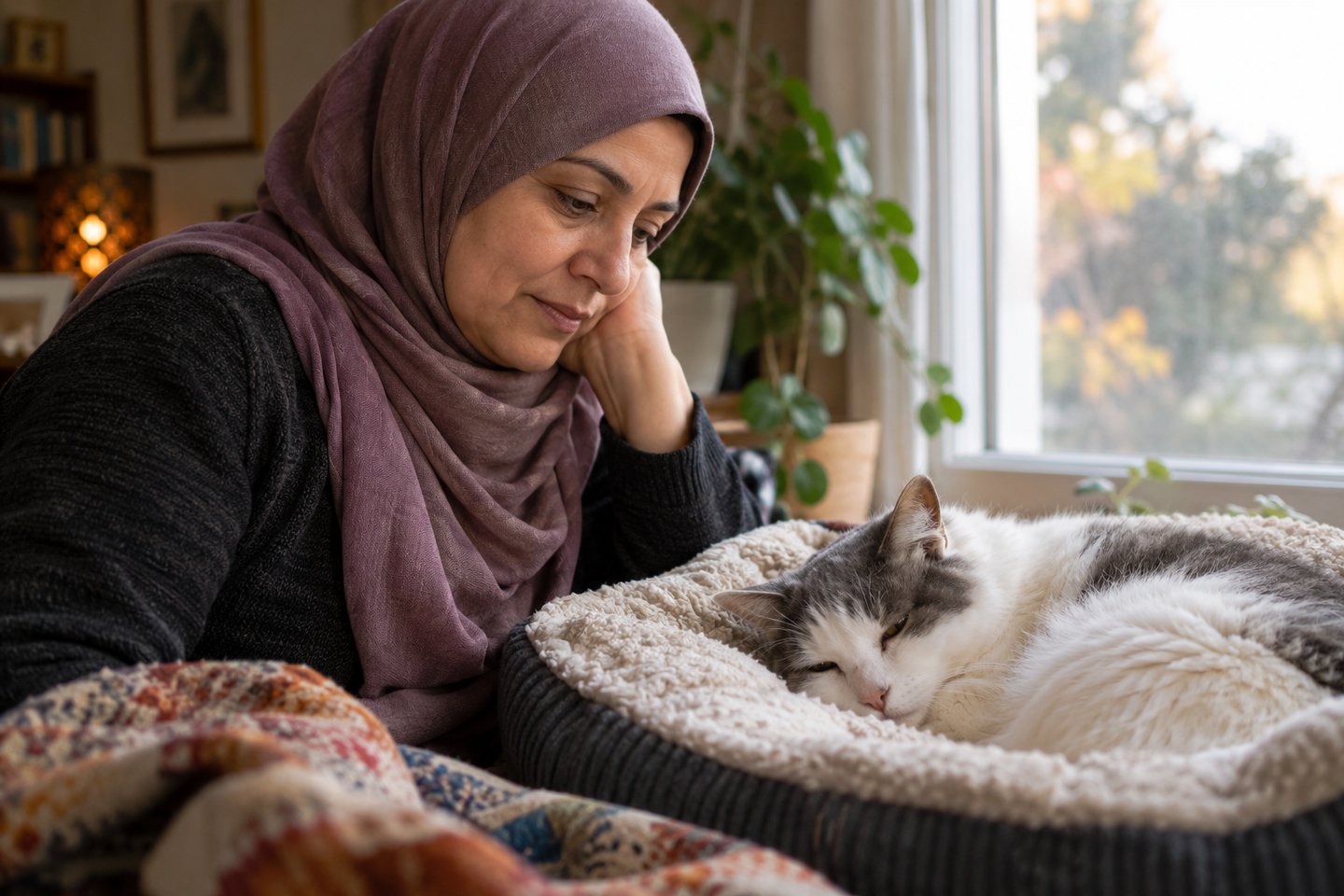
Grief can begin before a death.
Anticipatory grief is grief that arises before an expected loss. When a pet has a serious illness or declining health, you may grieve changes already happening and the possibility of a future without them. You can feel sadness about what is ahead while continuing to care for and connect with your pet today.
For many families, a pet is woven into the rhythms of home: the morning greeting, a familiar place on the sofa, a companion through years of change. Imagining that absence can feel deeply personal.
What can anticipatory grief feel like?
Anticipatory grief can include sadness, worry, fear, guilt, and difficulty taking in information. You may miss routines that have changed, feel drawn to keep checking on your pet, or find that earlier losses come to mind. People experience this time differently, and feelings can shift from one moment to the next.
Sometimes the loss you feel is already present: a walk that has become shorter, a favorite activity that has changed, or a routine now shaped by care. At other times, your thoughts may be with the goodbye still ahead.
If it is hard to absorb information at appointments, consider bringing written questions or asking someone you trust to join you. You can ask the veterinary team to explain something again.
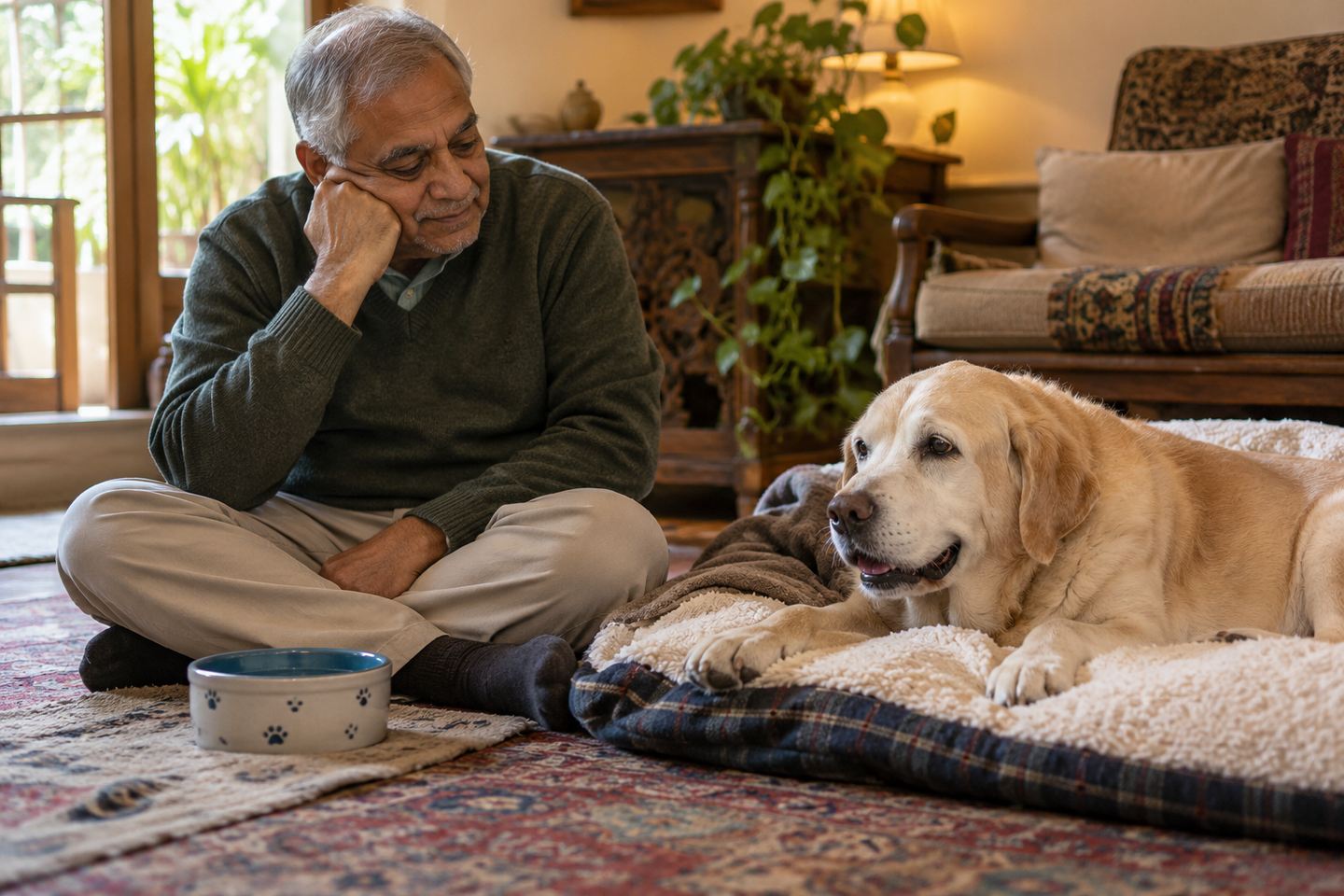
How can you cope with anticipatory grief?
Start with one manageable source of support: talk with someone who understands, write down questions for your veterinarian, ask for practical help, or make space for a quiet moment with your pet. Care for your own basic needs as well. A pet-loss support group or qualified counselor can offer additional support.
- Give the feeling a little room.You might say, “I’m sad about what is changing.” Naming an emotion can be a way to acknowledge what you are carrying.
- Choose someone who will listen.Consider asking, “Could you sit with me and hear how things are?” You can be specific about the support you would appreciate.
- Share a practical task.Ask whether someone can help with an errand, a meal, or transport to an appointment. Discuss help with animal care with your veterinary team.
- Bring questions to the veterinarian.Write down what you want to understand about your pet’s condition, comfort, and care plan. Ask whom to contact if something changes.
- Make space for an ordinary moment.A few quiet minutes beside your pet may be enough. Follow their comfort and veterinary guidance about activity.
- Attend to your own basic needs.Consider what would support eating, rest, and a little time away from responsibilities. Accept help where it is available.

Is it okay to feel joy or need a break?
Yes. Moments of enjoyment, rest, or relief can exist alongside love and grief. Caring for an ill pet can be demanding, and accepting help or taking a break can support your capacity to keep caring. Your feelings may be mixed, and you can meet them with kindness.
Caregiving may involve disrupted routines, practical demands, and difficult conversations. Let your veterinary team know what feels hard to manage so you can discuss a workable care plan and available help.
A gentle question for today
What would help me feel a little more supported—and who could I ask?
Let meaningful moments be simple.
If you would like to make memories, choose something that suits your pet’s comfort and your own capacity. A photograph, a short recording, a note about their familiar habits, or simply sitting together can be meaningful.
A keepsake activity is optional. Ask the veterinary team for guidance if it involves handling your pet or could affect their comfort.
Something you might reflect on
What is one small thing about my pet that I want to remember—a sound, a gesture, a favorite place, or a way they greet me?
You can choose what feels right today. There is no requirement to create a project or make every moment into a memory.

When should you seek more support?
You can seek support at any point. If grief is interfering with sleep, eating, work, relationships, or your ability to manage daily life, consider speaking with a qualified mental-health professional or healthcare provider. Your veterinary team may also know pet-loss groups, counselors, or veterinary social work resources.
Your veterinary team
Bring questions about your pet’s health and comfort to the veterinarian. Ask about local family-support resources or a veterinary social worker, where available.
Pet-loss and grief support
Look for groups or professionals who understand grief before a loss. Check who each service supports, what it offers, and how to access it.
A pet death doula
A doula may offer non-medical listening, help organize questions, and support practical preparation. They can also help identify other resources. Learn more about the pet death doula role.
Different kinds of care can work together. A doula’s grief-informed support complements veterinary care and qualified mental-health support. Choose the combination that meets your needs.
Making room for your own experience.
Is grieving before a death a way of giving up on my pet?
Grief can arise as you recognize an expected loss. You can acknowledge those feelings while continuing to care for your pet, ask questions, and share time together. Your veterinary team can help you understand the care options available.
Why do people in my family seem to be responding differently?
Each person brings a different relationship with the animal and their own experiences of loss. Grief is an individual experience. It can help to ask what each person is feeling and what support they would appreciate.
Can I ask for support while my pet is still alive?
Yes. Support can begin before a death. Tell a trusted person or professional that you are anticipating a loss, or look for a pet-loss service that explicitly welcomes people experiencing anticipatory grief.